Keynote Speakers
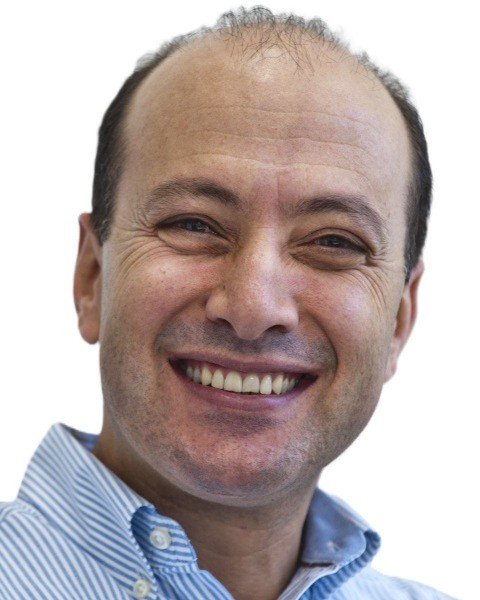
Tamim Asfour
KIT - Director H²TTamim Asfour is full Professor at the Institute for Anthropomatics and Robotics, where he holds the chair of Humanoid Robotics Systems and is head of the High Performance Humanoid Technologies Lab (H2T). His current research interest is high performance 24/7 humanoid robotics. Specifically, his research focuses on engineering humanoid robot systems integrating the mechano-informatics of such systems with the capabilities of predicting, acting and learning from human demonstration and sensorimotor experience. He is developer and the leader of the development team of the ARMAR humanoid robot family.
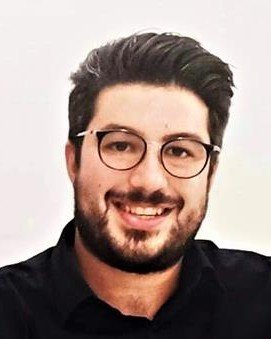
Giuseppe Bruno Averta
Polytechnic of TurinGiuseppe Bruno Averta is currently Assistant Professor of Robot and Machine Learning at the Polytechnic of Turin. Previously, he was a postdoctoral researcher at the University of Pisa, where in 2020 he got the Ph.D. in Robotics cum laude. His dissertation, "Human-aware robotics: Modeling human motor skills for the design, planning, and control of a new generation of robotic devices" was selected as the winner of the Georges Giralt PhD Award 2021 (for the best European PhD thesis). He is also an Italian Institute of Technology Alumnus. In 2019, he was a visiting student at the Eric P. and Evelyn E. Newman Laboratory for Biomechanics and Human Rehabilitation Group at MIT. Giuseppe’s team conducts research towards the development of truly embodied intelligence for human-robot cooperation. Their research activities include developing intelligent robotic behaviors inspired by human skills, deep learning for egocentric vision, and human-inspired design, planning, and control guidelines for autonomous, collaborative, assistive, and prosthetic robots. Giuseppe is also interested in tech-transfer of research activity and co-founded FocoosAI, a startup that aims to develop green and efficient deep learning for vision.
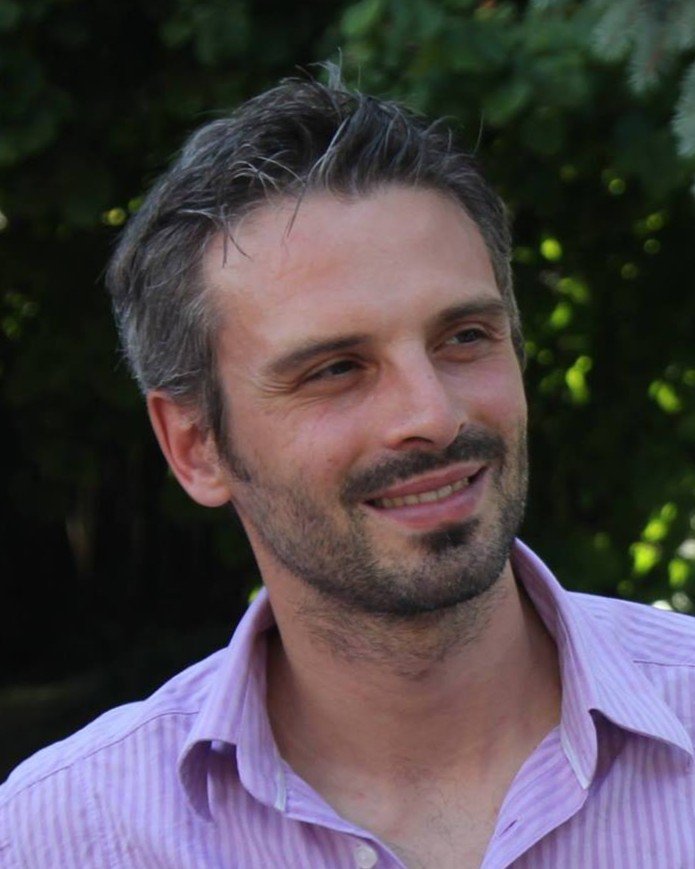
Michele Focchi
University of TrentoMichele Focchi is a world-recognized expert in motion planning and control of quadruped robots, with 16 years of experience in robotics. He is particularly known for his pioneering work on heuristic locomotion in unstructured terrains. His research lies at the intersection of control, optimization, and machine learning, with a focus on enhancing quadruped robot performance in challenging environments through optimization-based techniques. Currently, he is a Professor at the University of Trento in the Department of Information Engineering and Computer Science (DISI), where he teaches introductory robotics courses and a Scientific Advisor for All3. From 2022 to 2024, He was also a visiting scientist at the Istituto Italiano di Tecnologia (IIT), where previously he co-founded the Dynamic Legged Systems (DLS) Lab, a leading international research team dedicated to the development of quadruped robots and their locomotion. Dr. Focchi earned both his B.Sc. and M.Sc. in Control Systems Engineering from Politecnico di Milano. In 2013, he completed his Ph.D. in Robotics at IIT, contributing to the Hydraulically Actuated Quadruped Robot project. His work evolved from low-level controllers for locomotion to whole-body control, model identification, and robust locomotion strategies for real-world platforms.
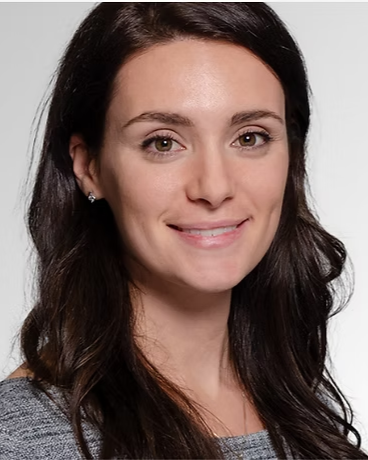
Carlotta Mummolo
University of BariCarlotta Mummolo earned dual PhD degrees in Mechanical Engineering from Politecnico di Bari and New York University. In 2018, she joined the Department of Biomedical Engineering at New Jersey Institute of Technology as an Assistant Professor. She returned to Politecnico di Bari in 2022 and became Associate Professor in 2025 in the Department of Mechanics, Mathematics and Management. She has ten years’ teaching experience in robotics, biomechanics, and applied mechanics. Her publications span mechanisms and robotics, nonlinear dynamics, biomechanics, and human and robotic balance and locomotion, with articles in the ASME Journal of Mechanisms and Robotics, Journal of Biomechanical Engineering, and Mechanism and Machine Theory. She is active in the ASME Mechanisms and Robotics community and has served IEEE Robotics and Automation Society conferences. She directs research at the intersection of mechanics, biomechanics, and robotics to study human and robotic motion and develop quantitative frameworks for motor-performance assessment.
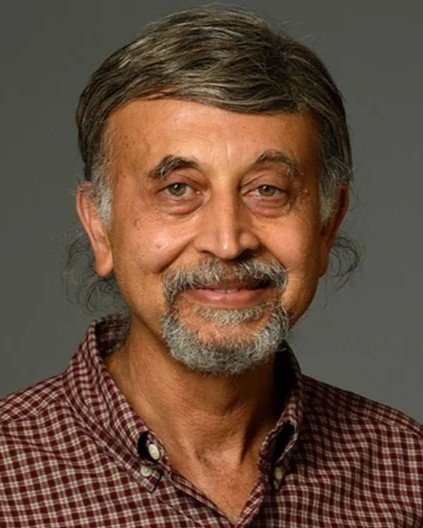
Nitish Thakor
Johns Hopkins University School of MedicineNitish Thakor is a professor of biomedical engineering. He also has an appointment in the Whiting School’s Department of Electrical and Computer Engineering. He conducts research on neurological instrumentation, biomedical signal processing, micro and nanotechnologies, neural prosthesis, clinical applications of neural and rehabilitation technologies, and brain-machine interface. Thakor directs the Laboratory for Neuroengineering and is also the director of the NIH Training Grant on Neuroengineering.